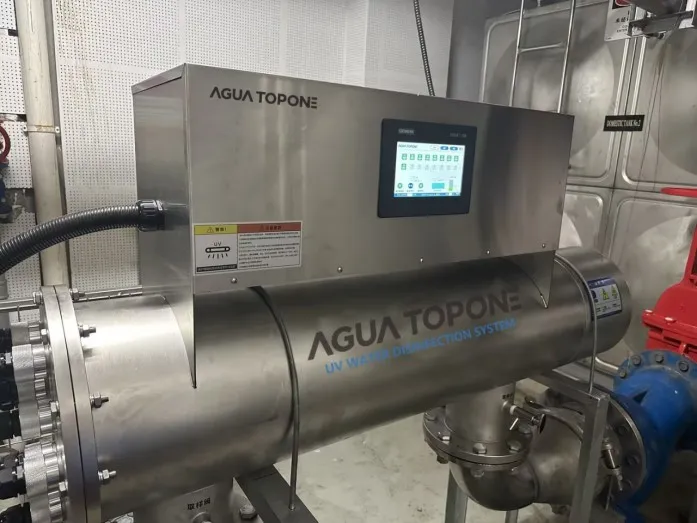

Secondary water supply systems have become essential facilities for high-rise apartment hotels. In modern high-rise apartments and hotels, secondary water supply systems typically use sealed, sterile water tanks to store water. These tanks pressurize the water to ensure stable delivery to guestroom faucets, showers, and other water usage points. This setup not only guarantees a stable water supply but also meets the operational demands of large hotels.

However, secondary water supply systems, due to their unique setup, often face several challenges that can impact water quality:
Water tank hygiene:
Although modern high-rise hotels and apartments typically use sealed, sterile water tanks, the dynamic process of pressurized pipelines and storage can increase the risk of bacterial growth. During this process, the residual chlorine in municipal water is often depleted, making tank maintenance a critical task.
Design limitations of secondary water supply systems:
These systems are designed to store municipal water centrally to address high demand when direct supply is insufficient. However, during periods of low occupancy or reduced water usage, such as in hotels and apartments, water remains stored in tanks for extended periods, accelerating bacterial proliferation.
Environmental impact on water tanks:
The location and environment of the water tank also influence water quality. If the tank is situated in a humid or high-temperature environment, the water inside becomes more susceptible to microbial growth. High temperatures and humidity promote the accumulation of organic matter and particulates, which can serve as nutrients for bacteria and algae, speeding up their growth. These organic deposits may further deteriorate water quality.
Although more hotels and apartment operators are adopting the latest secondary water supply equipment and solutions to improve the cleanliness of municipal water reaching high-rise residents, the effectiveness remains limited. During the long transportation process, bacterial contamination is almost inevitable. Therefore, instead of focusing solely on reducing bacterial growth during water transportation, we should consider implementing UV water disinfection systems at the supply endpoint to eliminate bacteria and improve water cleanliness.