


The short answer:
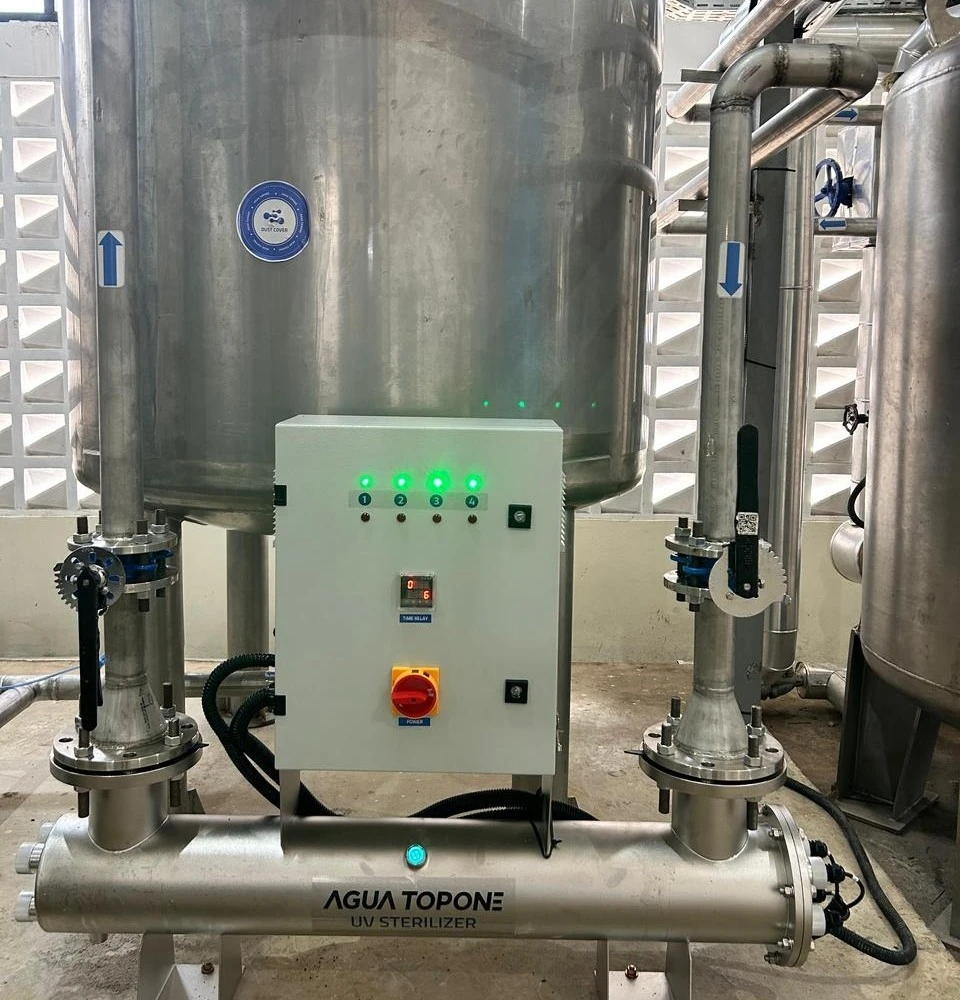
For most potable-water systems in which ultraviolet disinfection serves as the final microbial barrier, install the main UV reactor after the storage tank and final particle-removal stage, as close to the distribution point as practical.
Why UV Is Usually Better After the Storage Tank
UV has no residual protection
Chemical disinfectants can continue suppressing microorganisms after the initial treatment if an adequate residual is maintained. UV does not work that way. The U.S. Environmental Protection Agency states that UV leaves no residual and that delivered UV dose depends on UV intensity, flow rate and ultraviolet transmittance (UVT).[1] The UK Drinking Water Inspectorate similarly identifies the absence of a residual effect as a principal limitation of UV, requiring careful hygiene in storage and distribution.
If UV is installed only before an atmospheric storage tank, the treatment sequence is:
UV treatment → storage tank → pump and distribution → point of use
Any contamination or regrowth occurring in the tank or downstream plumbing bypasses the UV barrier. Moving the final UV stage downstream changes the sequence to:
storage tank → pump → final filtration → UV treatment → point of use
The second arrangement disinfects water after it has passed through the component most likely to increase water age, collect sediment, exchange air, and expose the water to access openings and wetted surfaces.
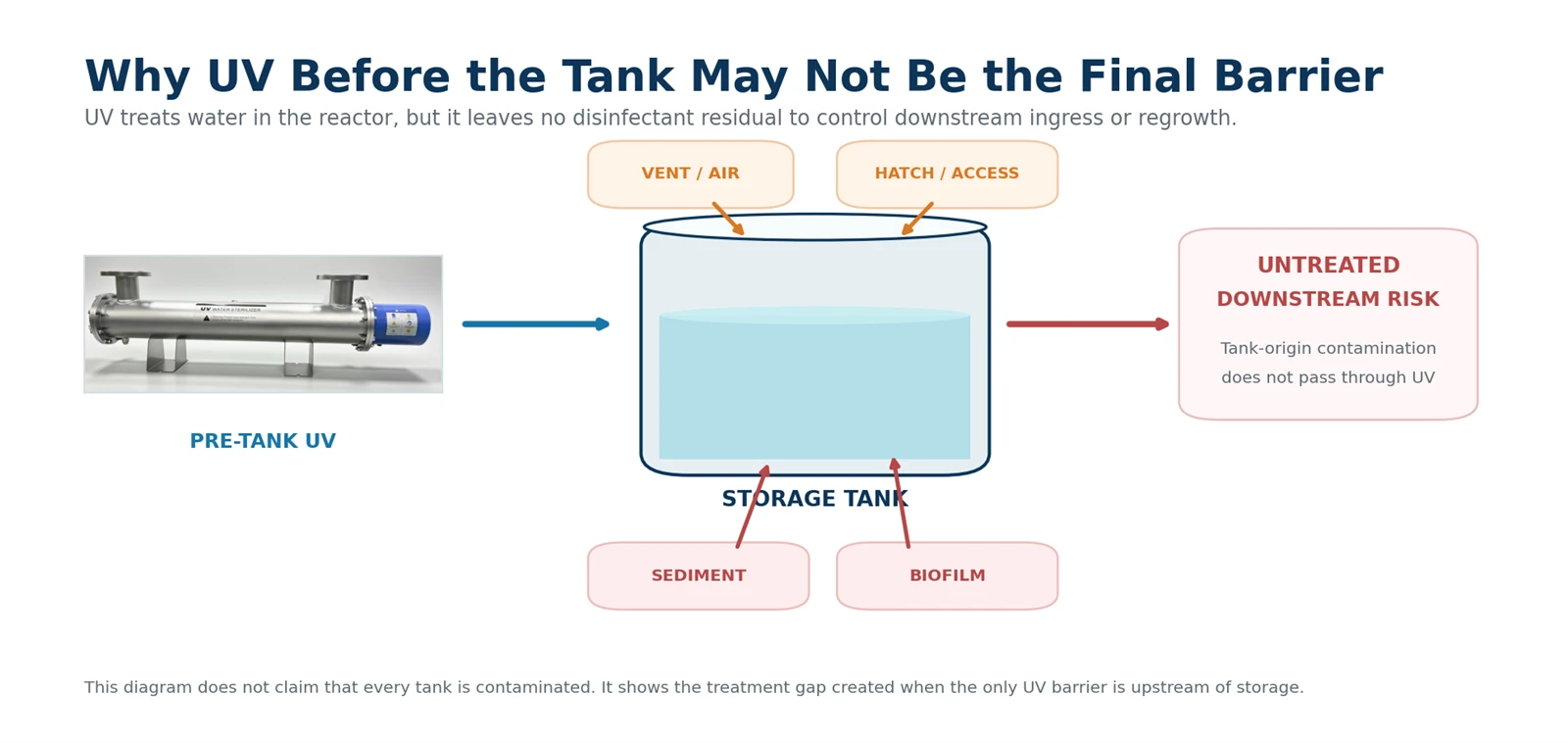
Figure 1. Pre-tank-only UV leaves downstream storage events outside the final treatment barrier.
Storage can change microbiological water quality
Storage is not microbiologically neutral. The outcome is influenced by temperature, residence time, available nutrients, sediment, tank turnover, surface condition and hygiene.
In a peer-reviewed study of household storage tanks in Amman, Jordan, Evison and Sunna reported that heterotrophic bacterial counts increased from approximately 1.7 log CFU/mL to 5.2 log CFU/mL after four days and 5.7 log CFU/mL after seven days of storage.[3] Expressed as approximate counts, that is an increase from about 50 CFU/mL to roughly 160,000 CFU/mL and then 500,000 CFU/mL. The study identified temperature as the factor with the greatest influence on regrowth.
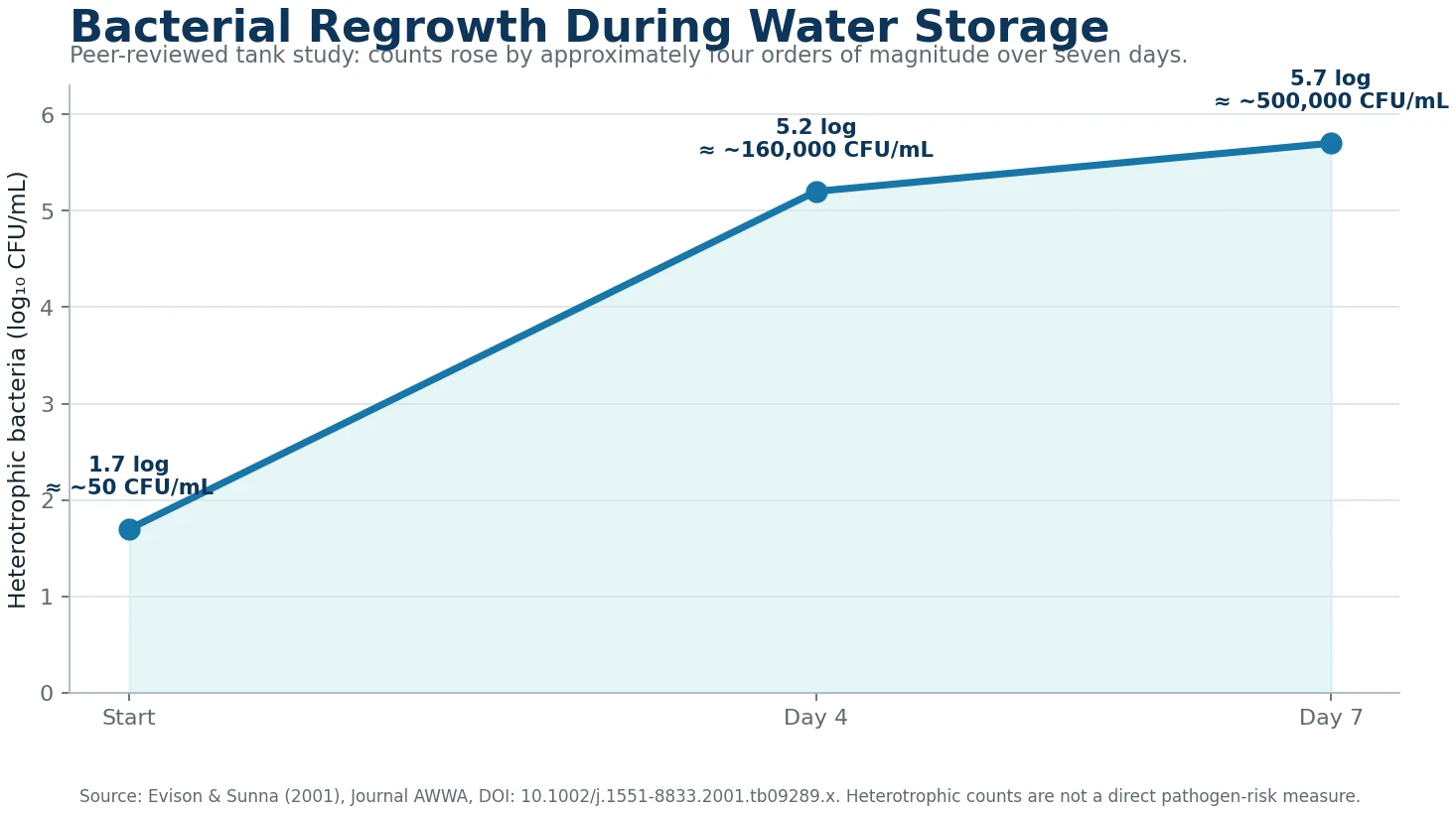
Figure 2. Peer-reviewed data show substantial heterotrophic bacterial regrowth during storage.
Source: Evison & Sunna (2001). Heterotrophic counts are not a direct pathogen-risk measure.
These heterotrophic counts do not mean that every organism detected was a pathogen, and they should not be treated as a direct calculation of disease risk. They do, however, show that biologically active water can change substantially during storage. A UV unit installed only upstream cannot control growth that occurs afterward.
A controlled field study in Ecuador reached a related conclusion. Researchers followed water from its source into household storage and compared it with matched containers kept under controlled conditions. Increasing contamination was observed in 46.4% of containers for enterococci and 32.8% for E. coli. In the households that experienced recontamination, the average increases were 0.5–1.3 log for enterococci and 0.6–1.2 log for E. coli.
What the Evidence Does-and Does Not-Prove
The studies above do not prove that every tank causes microbial growth. Tank design, turnover, temperature, cleaning, residual disinfectant and source-water quality vary widely. A sealed, hygienically designed tank with frequent turnover may maintain excellent water quality.
Instead, the evidence supports a risk-control principle:
When UV is the only final disinfectant, placing it after storage removes a major uncontrolled section from the treatment chain.
Post-tank UV does not make tank hygiene optional. A heavily contaminated tank can overload pretreatment, foul filters, create taste and odor problems, release biofilm fragments and continuously challenge the UV system. The tank still requires sanitary design, secure vents and hatches, planned turnover, inspection, cleaning and appropriate microbiological verification.
Before the Tank, After the Tank, or Both?
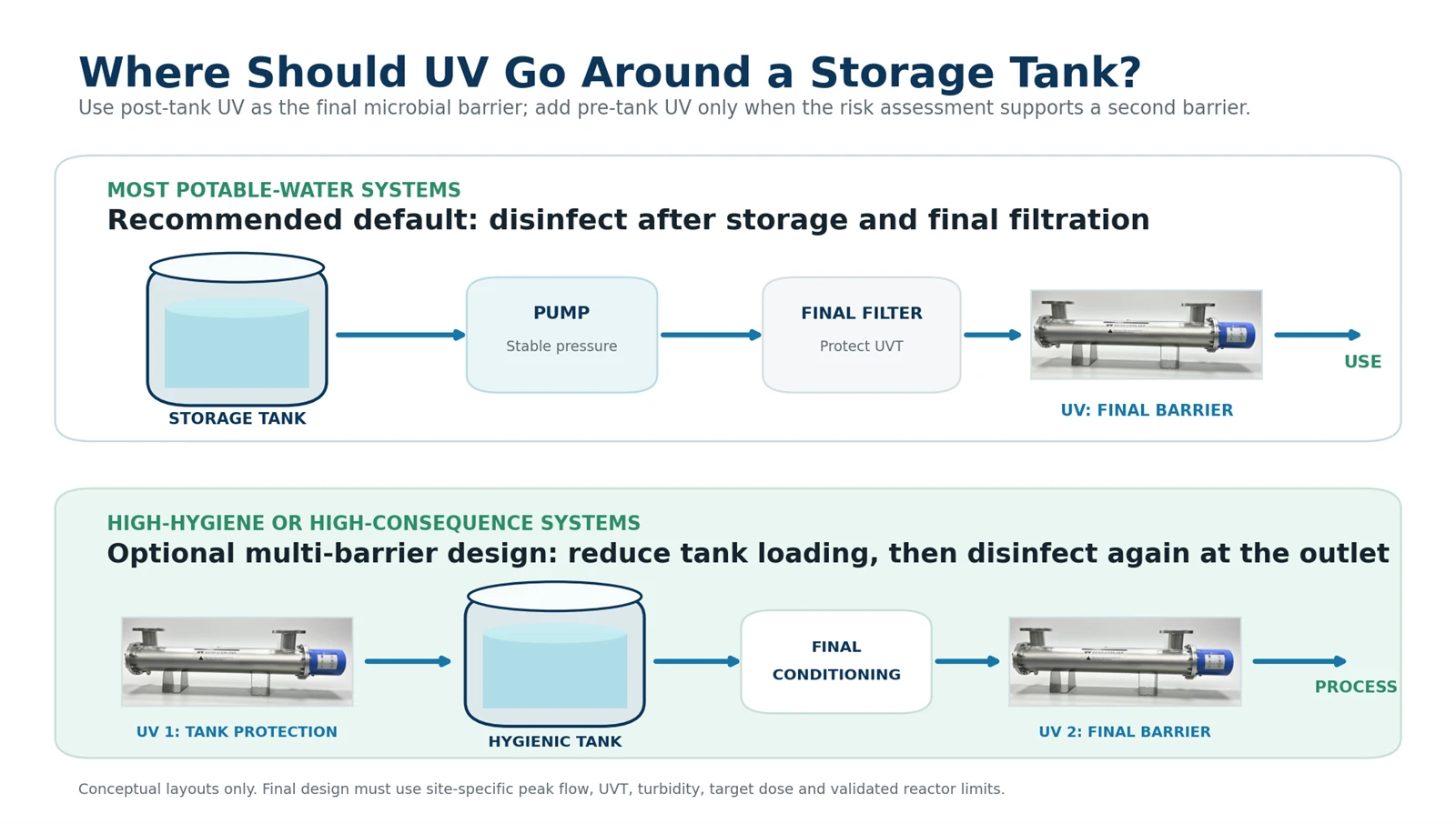
Figure 3. Recommended default and multi-barrier UV layouts around a storage tank.
Option 1: UV before the tank only
This arrangement can reduce the number of viable organisms entering storage. It may be useful when the tank must be protected from an incoming microbial load or when a downstream chemical disinfectant maintains a verified residual.
However, pre-tank UV alone does not protect against:
- contamination through the tank vent, hatch or overflow;
- biofilm or sediment already present in the tank;
- microbial regrowth during long residence times;
- contamination introduced by the outlet pump or downstream piping;
- loss of microbiological quality after maintenance.
For a potable system with no downstream residual disinfectant, this is generally not the strongest location for the only UV barrier.
Option 2: UV after the tank
For most small potable-water, rainwater, well-water and process-water systems, post-tank UV is the preferred default. Water is pumped from storage, conditioned to meet the UV reactor's water-quality requirements, disinfected and then delivered to the user.
A typical sequence is:
storage tank → booster or pressure pump → sediment filtration → other required treatment → UV reactor → short hygienic distribution line
The University of Arizona Cooperative Extension recommends a rainwater treatment train consisting of particle filtration, activated carbon and UV disinfection placed after the pressure tank or on-demand pump.
The UV reactor should be sized for the maximum instantaneous outlet flow, not the average daily demand or the rate at which the tank fills. When a booster pump starts, the UV reactor may experience a much higher short-term flow than the daily average. Because UV dose depends partly on residence time, exceeding the validated maximum flow can reduce dose.
Option 3: UV both before and after the tank
Dual-stage UV may be justified where:
- the tank stores RO permeate or high-purity process water;
- microbiological specifications are stringent;
- the tank has long residence times or elevated temperatures;
- incoming water creates a high biological load;
- a food, beverage, pharmaceutical or laboratory process needs an additional barrier
- continuous operation and redundancy are more important than minimum capital cost.
The first UV stage reduces the viable load entering storage. The second stage treats water leaving the tank. A recirculation UV loop may also help control the microbial condition of stored water, but its effectiveness depends on verified circulation, tank mixing, turnover and sanitary design. A recirculation loop should not be assumed to expose every part of a poorly mixed tank equally.
Final Recommendation
For most potable-water systems, the preferred arrangement is to install the final UV water sterilizer after both the storage tank and the last filtration stage. This positions the microbial barrier closer to the point of use and allows the system to treat contamination or regrowth that may occur during storage.
Pre-tank UV remains useful as an additional control, while dual-stage UV may suit high-purity or microbiologically sensitive applications. However, installation position alone does not guarantee effective disinfection. Peak flow, UVT, turbidity, target UV dose, tank hygiene and downstream piping conditions must also be considered during system design.
The practical rule is simple: if water can undergo microbiological change after passing through the UV reactor, install a final validated disinfection barrier closer to the point of use.


