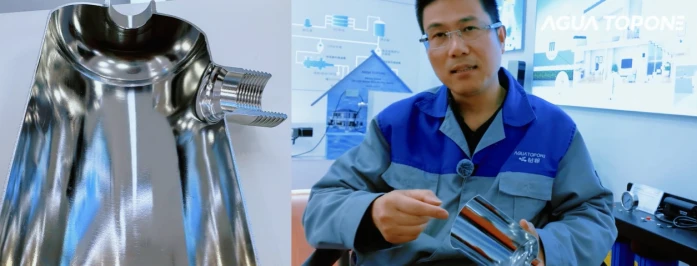

In the UV water disinfection industry, manufacturing a UV sterilizer is not simply about installing a UV lamp inside a stainless-steel chamber. Many suppliers can produce UV reactors and provide basic sterilization claims, but professional OEM customers require much more than a standard product.
For water treatment brands, distributors, and engineering companies, the key question is not only:
Can this UV system kill microorganisms?
The more important question is:
Can the manufacturer accurately design, calculate, and validate the UV dose under real operating conditions?
This is one of the most important differences between a basic UV supplier and a professional UV water sterilizer OEM manufacturer.
A reliable UV disinfection system is an engineered solution. Its performance depends on the cooperation between hydraulic design, optical efficiency, UV intensity, water quality, and flow conditions. Only when these factors are properly optimized can the UV system deliver stable and effective disinfection performance.
Understanding UV Dose: The Core Performance Indicator of UV Disinfection
UV dose represents the amount of ultraviolet energy delivered to microorganisms during their exposure to UV light.
The basic relationship is:
UV Dose = UV Intensity × Exposure Time
The unit of UV dose is usually expressed as mJ/cm².
UV intensity describes the strength of ultraviolet energy inside the reactor, while exposure time depends on water velocity and how long water remains inside the UV chamber.
Different applications require different UV dose levels. Residential water purification systems commonly operate around 30 mJ/cm², while commercial and industrial applications may require higher UV doses depending on water quality, flow rate, and disinfection requirements.
However, one important point is often misunderstood:
A higher UV lamp power does not automatically mean better disinfection performance.
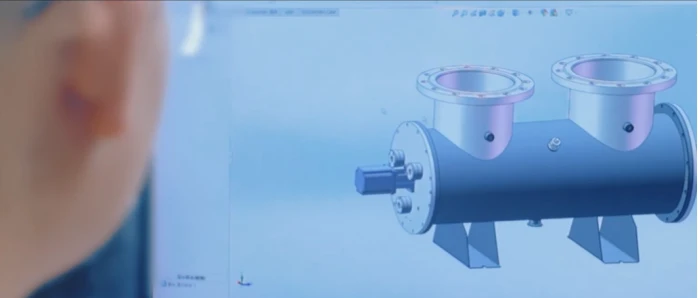
The final UV dose is determined by the complete reactor design, including chamber structure, water flow distribution, lamp positioning, quartz sleeve transmission, internal reflection efficiency, and exposure time.
This is why professional UV manufacturing requires engineering capability rather than simply selecting a higher-power UV lamp.
Why OEM Customers Evaluate UV Dose Design Capability
For OEM customers, the UV system is not just a purchased component. It becomes part of their own brand's product portfolio. Therefore, the reliability and performance of the UV system directly influence their market reputation.
A common mistake in the industry is evaluating UV products only based on specifications such as lamp wattage, UV output power, reactor size, or maximum flow rate.
However, these parameters alone cannot fully represent real disinfection performance.
Two UV systems with the same lamp power may achieve different results because of differences in hydraulic design, reactor geometry, UV distribution, and water residence time.
A professional UV manufacturer understands that the goal is not simply to increase power, but to optimize the entire system so that the required UV dose can be achieved efficiently and consistently.
For OEM brands, this capability reduces technical risks and helps ensure that the final products perform reliably in real customer applications.
UV Dose Validation Provides Confidence Beyond Marketing Claims
In the global water treatment market, professional customers increasingly require technical evidence instead of general marketing statements.
A statement such as:
"99.99% sterilization rate"
does not provide enough information for engineering evaluation.
A professional UV specification should clearly explain the conditions behind the performance, including flow rate, UVT (UV transmission), and UV dose.
For example, the actual performance of a UV system depends on whether the claimed UV dose can be maintained at the designed flow rate and under realistic water quality conditions.
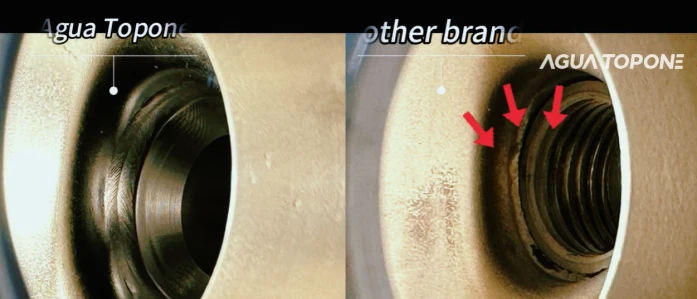
This is why experienced OEM customers pay attention to whether a manufacturer can provide reliable engineering data and validation support.
A supplier with strong UV dose design capability can help customers develop products that are easier to promote, easier to install, and more trusted by end users.
Different Applications Require Different UV Dose Solutions
One of the biggest challenges in UV water treatment is that there is no universal design suitable for every application.
A residential whole-house UV system, a commercial coffee shop water purification system, and an industrial process water system may all require completely different engineering considerations.
Residential applications usually focus on compact structure, energy efficiency, and stable operation.
Commercial applications require higher flow capacity, continuous operation capability, and long service life.
Industrial projects often require more accurate UV dose control, customized reactor design, and integration with larger water treatment systems.
Therefore, an experienced OEM manufacturer must understand not only UV technology but also the actual application environment behind each project.
The ability to customize UV solutions according to different requirements is one of the most valuable capabilities a manufacturer can provide.
AGUATOPONE: Customized UV Dose Design Capability for Global OEM Partners
At AGUATOPONE, we understand that every OEM customer has different market requirements, installation conditions, and technical expectations.
A standard UV product cannot always provide the best solution for every application.
Different projects may require different flow rates, different chamber structures, different connection methods, different electrical standards, and different UV dose targets.
Therefore, our focus is not only on manufacturing UV water sterilizers, but also on providing professional UV engineering solutions.
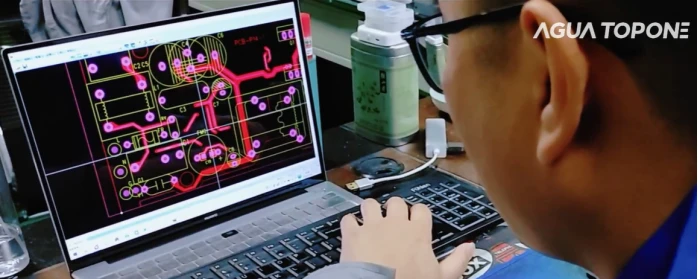
With our experienced technical team and extensive knowledge in water treatment applications, AGUATOPONE works closely with OEM partners to develop UV systems that match their specific requirements.
Our customization capability covers the complete development process, from initial application analysis to final production.
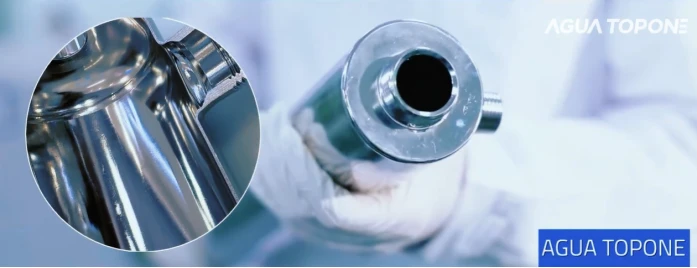
Based on customer requirements, our engineering team can evaluate important factors such as:
Required flow rate
Water quality conditions
UV transmission characteristics
Installation environment
Target disinfection performance
Through these evaluations, we can optimize reactor structure, UV output configuration, and system design to achieve the required UV dose.
For example, a compact residential system may prioritize efficiency and space-saving design, while a commercial project may require higher flow capacity and longer continuous operation. Industrial applications may require more precise UV dose control under demanding conditions.
Different applications require different engineering approaches.
This is where OEM technical capability becomes important.
At AGUATOPONE, our team supports customers throughout the entire product development process, including application analysis, UV solution selection, reactor optimization, electrical design coordination, product verification, and mass production support.
This approach allows OEM partners to reduce development time, improve product reliability, and bring competitive UV water disinfection solutions to their markets faster.
Conclusion: UV Dose Design Capability Creates Long-Term OEM Value
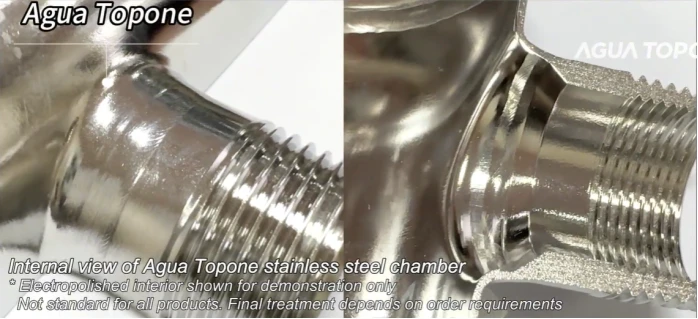
Choosing a UV water sterilizer OEM manufacturer is not simply choosing a supplier that can manufacture stainless steel chambers and install UV lamps.
The real difference lies in whether the manufacturer has the engineering capability to transform UV technology into a reliable, validated, and application-specific disinfection solution.
A manufacturer with strong UV dose design capability can provide more accurate performance, lower product risks, stronger technical support, and greater flexibility for customized projects.
At AGUATOPONE, we believe successful OEM cooperation is built on three foundations:
professional engineering capability, reliable manufacturing quality, and continuous technical support.
With our experienced technical team and customized UV design capability, AGUATOPONE continues to work with global partners to develop UV water disinfection solutions that meet different market needs.
From standard UV sterilizers to customized OEM projects, we are committed to helping customers achieve reliable UV performance through professional engineering and manufacturing expertise.